
Franklin Templeton Adds Women’s Self Defense Class
The MA Defense team brought level 1 reality self-defense workshop to Franklin Templeton’s St. Petersburg office in Carillon Park this past Tuesday at 4pm. No mats were rolled out and nobody changed into gym gear. The group of 20 ladies came in work clothes and attentively participated in a skills training. As a result, they increased their safety IQ by 200%.
Starting with awareness, criminal intent and what the bad guy controls
We began with the skills that matter most and are the easiest to use: staying aware of your surroundings, holding a confident stance, and using your hands and voice to create distance before anything physical happens. Most people already know the “hands up, stay back” posture from movies. However, doing it for real, in a room, with someone coaching your positioning, feels different.
These basics need no athletic background. Anyone can learn to stand in a way that signals “I see you, and I’m not an easy target,” and it’s the part of self-defense you’re most likely to use. 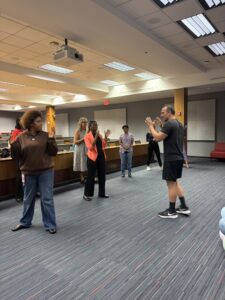
Reality Defense Vs Martial Arts Competition
Reality defense revolves around tactics developed from field training and exercises. The big difference between controlled competition and the real world are the rules of engagement. In sport, there is a referee, guidelines and an amount of parity built in to make things a “fair fight”. In the real world, this does not exist. You are viewed as a weaker, soft target. Therefore, you are chosen by the aggressor. You must react with force and tactics that stop the threat.
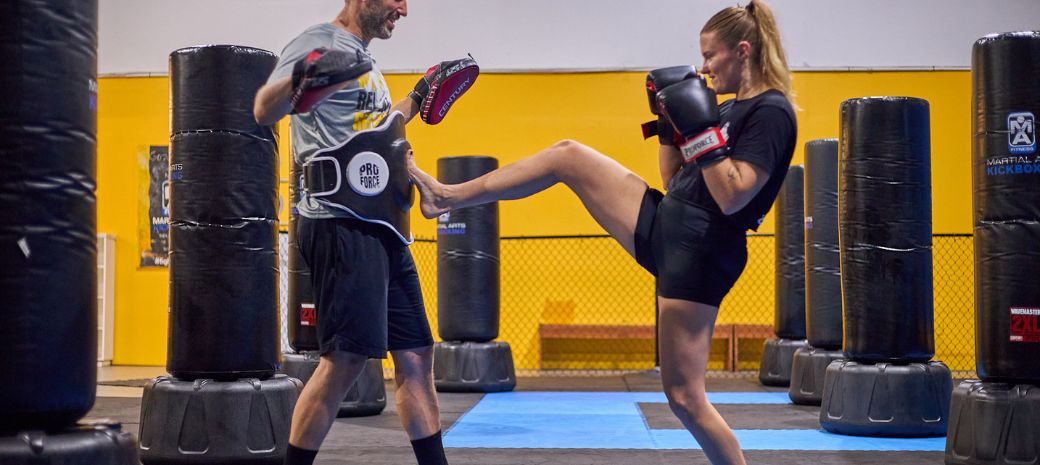
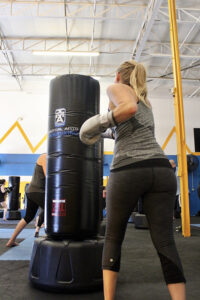
Stopping the threat could be preventative, with verbalization, removing yourself from the space or striking your way out. We got to simulate striking on targets. This allowed us to practice 2 of the easiest strikes to learn and apply immediately if needed regardless of size, speed or strength.
Drilling against a shield, where you can strike at full effort and feel the contact, gives you something a demonstration can’t: proof that you can do it. That confidence tends to carry past the session.
Corporate Self Defense Does More than Build Individual Confidence
Self-defense is a practical skill, but a session like this also does something else for a team. People who see each other every day in meetings get to laugh and struggle with a new movement and concepts. They also get to cheer each other on. The room was loud by the end, in a good way.
Training like this becomes a shared experience that the group will talk about together for several hours and days afterward. In addition, they will call back to remembrance in weeks ahead.
For employers, it’s a wellness benefit that’s useful, doesn’t need special facilities, and doesn’t require anyone to be “fit” to take part.
Thank you to the Franklin Templeton St. Pete team for having us.
Bring a session to your workplace
We run onsite classes for St. Petersburg and Tampa Bay employers, including self-defense workshops, lunchtime kickboxing, and studio-access perks for staff. Sessions can be tailored to your group’s size, space, and goals. No equipment is needed from your side.
If you’d like to talk about what that could look like for your team, call or visit us at MA Fitness Kickboxing, 4400 34th St N, St. Petersburg or reach out through martialartskickboxing.com.
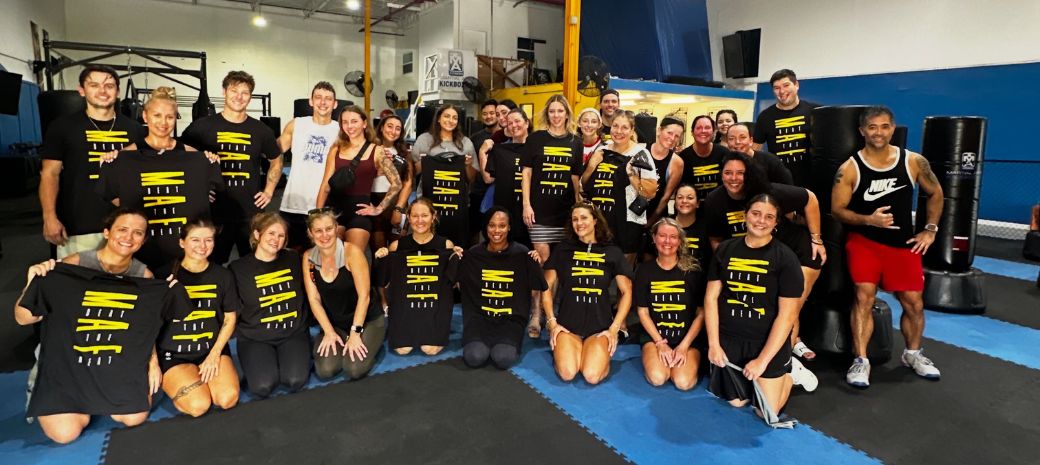
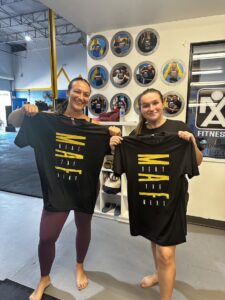 August, members took on the Beat the Heat 30-Day Challenge: to attend 10 training sessions in 30 days — kickboxing, strength training, or our Strike+ program. Saturday’s open house was our way of wrapping that up, celebrating finishers by handing out their beat the heat t-shirts, introducing new faces to the studio, and letting current members bring a friend along for the celebration.