How to Start Kickboxing With No Experience: A Beginner’s Complete Guide
If you’ve never thrown a punch or a kick in your life, starting kickboxing can feel intimidating. It shouldn’t be. Kickboxing is one of the most beginner-friendly combat sports because every class assumes you’re starting from scratch — and most gyms have taught thousands of people with zero background. This guide covers exactly what to expect, what you need, and how to get started safely.How to start kickboxing with no experience
What Is Kickboxing, Exactly?
Kickboxing is a stand-up striking sport that combines punches from boxing with kicks from disciplines like karate and Muay Thai. There are a few distinct styles:How to start kickboxing with no experience
- American kickboxing — punches and kicks above the waist; no elbows, no clinch
- Dutch kickboxing — aggressive combination punching with powerful low kicks
- Muay Thai — often grouped with kickboxing; adds elbows and knee strikes
Most gym “kickboxing” classes are fitness-oriented and borrow from all of the above without rigid rules. If you’re interested in competition, you’ll want to clarify which ruleset the gym trains under. If you’re training for fitness, conditioning, or self-defense, the distinction matters less.
For a deeper breakdown of styles, see Evolve MMA’s overview of kickboxing disciplines.
Is Kickboxing Safe for Beginners?
Yes, with proper instruction and appropriate gear. Most beginner injuries in combat sports come from poor technique — particularly overextending joints and striking with bad form — not from contact with a partner.
Key safety points:How to start kickboxing with no experience
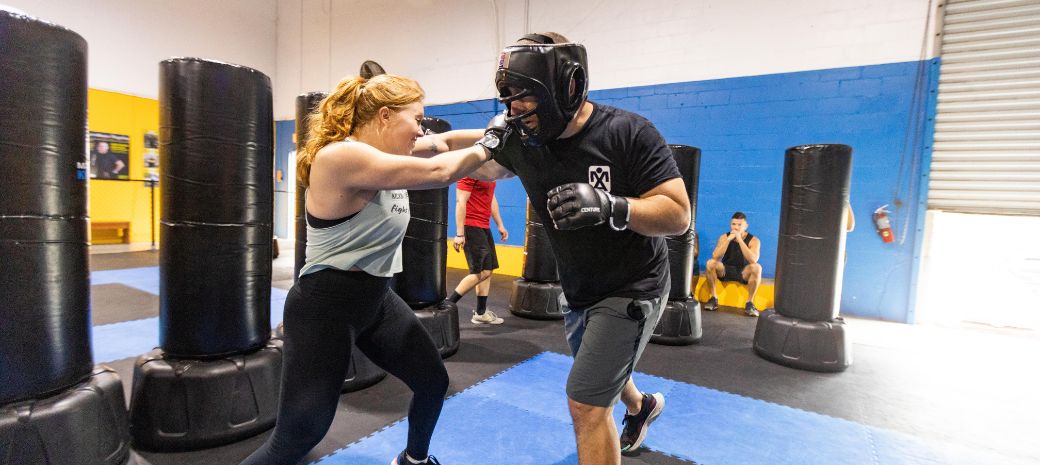
- Beginner classes are non-contact or controlled contact. You’ll hit pads and bags, not each other.
- Learn to fall and move first. Good footwork reduces the risk of ankle and knee strain.
- Sparring is optional and never rushed. Reputable gyms don’t push beginners into sparring until they’re ready — often 3–6 months in.
The American College of Sports Medicine classifies kickboxing aerobics as a moderate-to-vigorous intensity activity suitable for healthy adults. If you have any pre-existing conditions, consult your doctor before starting.
What Gear Do You Actually Need?
For your first few classes, you likely need very little — many gyms loan gloves for beginners. Before committing to any purchases, check with the gym. Here’s what you’ll eventually need:
Essential
- Boxing gloves — 12 oz is standard for most adults doing bag and pad work. 14–16 oz if you plan to spar.
- Hand wraps — cotton wraps (180 inches) protect your knuckles and wrist bones under your gloves. Learn how to wrap your hands before your first class.
Useful Later
- Mouthguard — required in most schools once contact begins (not necessary for heavy bag or pad work classes)
- Shin guards — needed for sparring & technique work if your gym does leg kicks
- Headgear — required for most sparring environments
- Groin protector — standard for male fighters; some women use rib protectors
Not Necessary to Start
- Kickboxing shoes — most people train barefoot or in socks
- A full training kit — athletic shorts and a t-shirt work fine
Brands like Hayabusa, Fairtex, and Venum are widely used and respected. Budget-friendly options from Title Boxing or RDX work well for beginners.
How to Find the Right Gym How to start kickboxing with no experience
The gym matters more than anything else early on. A good coach with basic equipment is far better than a bad coach in a world-class facility.
What to Look For
- Trial class or week — most legitimate gyms offer one.
- Self Paced Class or truly beginner program — not just “come join the regular class”
- Clean, maintained equipment — tells you the gym takes hygiene seriously (critical in contact sports)
- Respectful culture — do the coaches and other students seem approachable? Or does it feel like an ego fest? You’ll notice the vibe as soon as you walk in
What to Avoid How to start kickboxing with no experience
- High-pressure sign-up tactics
- Required year-long contracts before you’ve even trained
- Gyms that push you into sparring immediately
Use The Fight Map or simply search “[your city] kickboxing gym” to find options nearby. See a list of some of the best St Pete & Tampa kickboxing studios a little further down. Read Google reviews, but weigh them against your in-person visit — reviews can’t tell you what the culture actually feels like.
What Happens in a Beginner Kickboxing Class?
Structure varies by gym and focus of class, but if it’s chaotic and doesn’t seem well thought out then it probably wasn’t. Look for form corrections as well as a an appropriate challenge according to your level
Your first class, you’ll probably learn: How to start kickboxing with no experience
- Stance (orthodox vs. southpaw)
- Basic guard position
- Jab and cross (straight punches), Hook, Uppercut
- Possibly a front kick or roundhouse
Don’t worry about being perfect. Coaches expect confusion at first. Ask questions — it’s what you’re paying for.
The Core Techniques You’ll Learn First
Understanding these before your first class helps, but don’t try to self-teach them — get the fundamentals from an instructor.
Punches
- Jab — quick straight punch with your lead hand; sets up combinations
- Cross — power punch with your rear hand; rotates from the hip
- Hook — short, arcing punch to the head or body
- Uppercut — rising punch targeting the chin
Kicks
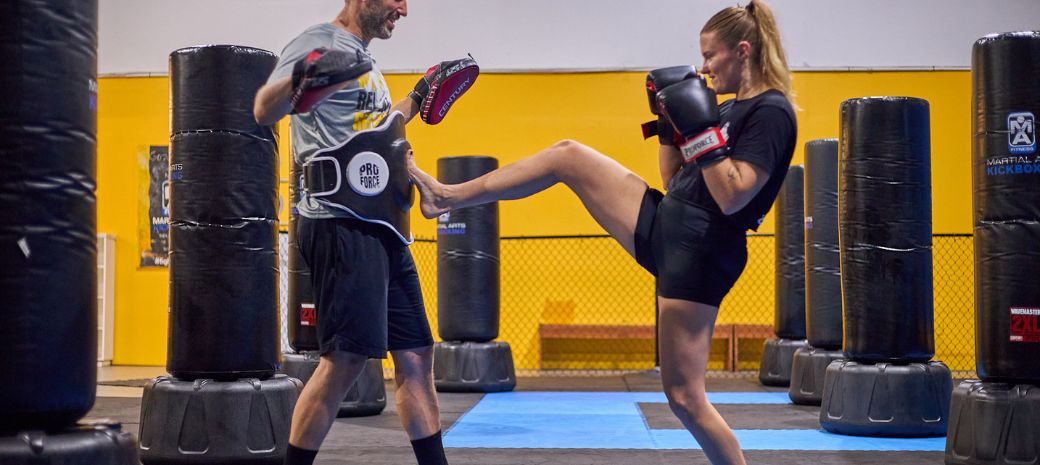
- Roundhouse kick — most common kick; rotating strike using the shin or instep
- Front kick (teep) — pushing kick to the midsection; used to create distance
- Side kick — linear kick with the heel; powerful at mid-range
- Low kick — targets the outer thigh; common in Dutch and Muay Thai styles
The Fightcamp YouTube channel has solid beginner demonstrations of each of these if you want to see them before your first class.
How Often Should Beginners Train?
2–3 times per week is the standard recommendation for beginners.
More than that, and recovery becomes an issue — your hands, wrists, and shins need time to adapt. Less than twice a week and progress is slow enough to be discouraging.
A realistic beginner schedule: How to start kickboxing with no experience
| Week | Sessions/Week | Focus |
|---|---|---|
| 1–4 | 2 | Stance, basic punches, footwork |
| 5–8 | 2–3 | Add kicks, combination work |
| 9–12 | 3 | Combination drilling, fitness improvement |
| 3–6 months | 3–4 | Introduce light padwork, possibly sparring |
Progress in kickboxing is nonlinear. Expect to feel clumsy for the first few weeks — that’s normal and temporary.
Physical Fitness Requirements
There aren’t any. Kickboxing will get you fit — you don’t need to be fit to start. How to start kickboxing with no experience
That said, beginners often feel cardio is the limiting factor early on. Short rounds (even 2–3 minutes) are exhausting if you’re not used to the intensity. This improves fast. Most people notice significant conditioning improvements within 4–6 weeks of consistent training.
If you’re gym isn’t training for fitness odds are you’ll want to supplement your gym training, the most useful things outside the gym are
- Jump rope — builds footwork coordination and cardio simultaneously
- Running — baseline aerobic conditioning
- Core work — stabilizes your stance and generates punching power
Common Beginner Mistakes
- Dropping your hands after punching — guard up, always
- Looking at the floor — keep your eyes on the target
- Holding your breath — exhale on every strike
- Telegraphing punches — big windup before punching signals your intent
- Neglecting footwork — punching from a static base limits power and defense
- Training through pain — soreness is normal; sharp joint pain is not; stop and check with a coach
Glossary of Terms You’ll Hear
| Term | Meaning |
|---|---|
| Orthodox | Right-handed stance (left foot forward) |
| Southpaw | Left-handed stance (right foot forward) |
| Guard | Hands-up defensive position |
| Combination (combo) | A sequence of strikes thrown together |
| Sparring | Controlled practice fighting with a partner |
| Clinch | Close-range grappling (allowed in some styles) |
| Heavy bag | Hanging padded bag used for solo drilling |
| Thai pads | Curved pads held by a partner for combo drilling |
| Shadowboxing | Solo drilling without a partner or bag |
Local Guide to Kickboxing Gyms in St. Petersburg and Tampa
If you’re in the Tampa Bay area, you have a solid range of options — from pure kickboxing fitness studios to full combat sports academies. Here’s a breakdown of well-regarded gyms across St. Pete and Tampa worth checking out.How to start kickboxing with no experience
St. Petersburg How to start kickboxing with no experience
MA Fitness Kickboxing ⭐ 5.0 (122 reviews) 4400 34th St N, St. Petersburg | (727) 392-3198
MA Fitness stands out as one of the top kickboxing fitness destinations in St. Pete. With heavy bag kickboxing, strength training and technique classes all geared towards adults it’s regarded as the best 45 minute workout. Members consistently highlight the supportive, non-judgmental atmosphere, very affordable membership tiers, and quality of instruction across ALL coaches — not just one standout. The format blends kickboxing technique with conditioning, including core work at the end of every session.
1MR One More Round Boxing, Kickboxing & Fitness ⭐ 4.9 (113 reviews) 2626 Central Ave Unit A, St. Petersburg | (727) 610-7293
Located on Central Ave, 1MR offers kickboxing alongside boxing in a family-friendly environment. Classes run seven days a week with both adult and youth programs. They offer a 10-class intro bundle (shareable, valid six months) that’s a low-commitment way to test the waters before committing to a membership. The only downside is long term contracts on memberships
The Joint Kickboxing & Fitness Club ⭐ 5.0 (34 reviews) 4746 22nd Ave S, St. Petersburg | (727) 289-4259
A smaller, community-focused gym with a 5.0 rating. The Joint offers cardio kickboxing, Muay Thai, traditional kickboxing, and strength training — giving beginners variety as they figure out what they enjoy. Multiple reviewers with zero prior experience called it one of the most beginner-accessible gyms they’d tried.
Phi Phi Muay Thai ⭐ 5.0 (94 reviews) 2299 9th Ave N, St. Petersburg | (727) 331-2382
Technically Muay Thai, but essential to mention for anyone open to the broader kickboxing family. Coach Fahd has built a reputation for thorough technical instruction and a welcoming atmosphere. A good fit if you want to learn real striking fundamentals with an emphasis on form over fitness.
Inside Control Academy ⭐ 5.0 (130 reviews) 4654 28th St N, St. Petersburg | (727) 592-8498
Primarily a BJJ and MMA academy, but offers kickboxing classes with a dedicated instructor. The gym culture is focused on mutual respect and learning — experienced members actively help beginners. If you want to eventually cross-train grappling with your striking, this is one of the best multi-discipline options in the area.
Tampa How to start kickboxing with no experience
Olando’s Kickboxing Fitness ⭐ 4.9 (61 reviews) 6824 S Manhattan Ave, Tampa | (813) 494-1456
One of Tampa’s more established kickboxing-specific programs, with adult and youth offerings. Coach Olando runs a structured curriculum with an emphasis on sparring development, including controlled 30-second rounds for kids. A solid choice for anyone on the South Tampa side of the bay.
Rumble Boxing Tampa ⭐ 4.8 (129 reviews) 119 W Tyler St, Tampa | (813) 414-5820
Located in downtown Tampa, Rumble is a group fitness format — half bag work, half floor/bench conditioning. It’s more boutique fitness than combat sports, but an excellent entry point for complete beginners who want high energy, structured classes, and no sparring whatsoever. Coaches are consistently praised for clear instruction.
Sniper MMA ⭐ 5.0 (217 reviews) 7402 N 56th St, Tampa | (813) 727-6102
If you’re in northeast Tampa and want an MMA-integrated approach that includes kickboxing, Sniper has one of the highest review counts in the area. Strong wrestling and striking programs, with coaches that push intensity without sacrificing technique.
GYMBOX ⭐ 4.0 (265 reviews) 8430 N Armenia Ave, Tampa | (813) 882-4103
A full-service gym with a boxing and kickboxing program embedded in a larger fitness facility. Good option if you want access to weights, cardio equipment, and kickboxing classes under one roof rather than a dedicated martial arts school.
Quick Comparison
| Gym | Location | Best For | Rating |
|---|---|---|---|
| MA Fitness Kickboxing | St. Pete | Kickboxing fitness, all levels | ⭐ 5.0 |
| The Joint Kickboxing | St. Pete | New on the block, variety | ⭐ 5.0 |
| Phi Phi Muay Thai | St. Pete | Technical Muay Thai | ⭐ 5.0 |
| Inside Control Academy | St. Pete | Multi-discipline, BJJ + striking | ⭐ 5.0 |
| 1MR One More Round | St. Pete | Boxing + kickboxing, kids | ⭐ 4.9 |
| Olando’s Kickboxing | Tampa | Dedicated kickboxing program | ⭐ 4.9 |
| Rumble Boxing | Tampa Downtown | Boutique fitness, beginners | ⭐ 4.8 |
| Sniper MMA | Tampa NE | MMA + kickboxing, competitive | ⭐ 5.0 |
| GYMBOX | Tampa | Full gym + boxing classes | ⭐ 4.0 |
All gyms listed offer trial classes or intro periods. Call ahead to confirm current schedules and pricing — hours and class offerings change seasonally.
Further Reading and Resources
- USA Kickboxing Federation — national governing body; useful if you’re interested in amateur competition
- World Association of Kickboxing Organizations (WAKO) — international amateur federation
- Precision Striking on YouTube — technical breakdowns for self-study
- Sherdog Forums — community discussions on finding gyms, gear, and technique
The Short Answer
Start by finding a gym with a beginner program and attending a trial class. Bring athletic clothes and water. It’ll be challenging not only for your fitness but your mental agility as you learn the complex body movement kickboxing demands. But take the step. It’s not as intimidating as you think. Find the right spot and you won’t regret it
Everything else — gear, frequency, or even competition — comes later. The only real prerequisite for starting kickboxing is showing up.
How to start kickboxing with no experience